Loading NexProTools...
Preparing interactive calculation engine
Preparing interactive calculation engine
Estimate your pregnancy due date using Naegele's rule. Calculate expected delivery date, current week of pregnancy, and trimester based on your last menstrual period.
Deterministic Mathematical Simulation Engine • Client-Side Computation
Estimate your pregnancy due date using Naegele's rule. Calculate expected delivery date, current week of pregnancy, and trimester based on your last menstrual period.
| Parameter | Value | Unit |
|---|---|---|
| Days Since Last Period | 0 | days |
| Average Cycle Length (Days) | 28 | days |
| Metric | Calculated Output |
|---|---|
| Estimated Due Date (Days Remaining) | 280 |
| Current Week of Pregnancy | 0 |
| Current Trimester | Second Trimester (Weeks 13-26) |
Want to use this tool on your own blog or website? Copy the code below to embed a fully interactive responsive version instantly.
Not medically reviewed. This Pregnancy Due Date Calculator tool is provided strictly for educational and general wellness screening purposes. Results are statistical estimations calculated using standardized body composition and metabolic formulas. These figures do not account for individual medical histories, metabolic properties, clinical conditions, genetics, or therapeutic factors. For medical advice or diagnosis, consult a licensed healthcare provider.
Personalized Actionable Insights
Select the first day of your last menstrual period (LMP) to estimate your due date, current pregnancy week, and trimester.
Select your LMP date from the date picker.
Your due date is estimated using Naegele's Rule (LMP + 280 days).
Confirm this estimate with your OB-GYN or midwife for clinical accuracy.
Understand the logic under the hood. Here is the formula and exact variable mappings utilized by the Pregnancy Due Date Calculator to compile results.
ESTIMATEDDUEDATE = f(lastPeriodDate, cycleLength)
The Pregnancy Due Date Calculator processes mathematical rules to calculate instant results. By taking inputs, applying standard parameters, and updating equations, it yields precise values without manual accounting errors.
Adjustable user parameter. Enter a valid value between 0 and 300 (Default value: 0days).
Adjustable user parameter. Enter a valid value between 20 and 45 (Default value: 28days).
The Pregnancy Due Date Calculator implements established body composition or gestational metrics approved by international wellness standards. circumferences and parameters are resolved using official medical ratios and logarithmic charts.
See the calculation in action. Below is a step-by-step mathematical example using default parameters to demonstrate how values are processed and generated.
Initialize all calculator inputs with their official default values: Days Since Last Period = 0days, Average Cycle Length (Days) = 28days.
The engine compiles the parameters and triggers the formulas in the calculation library.
Under this standard setup, the calculator yields: Estimated Due Date (Days Remaining): 280, Current Week of Pregnancy: 0, Current Trimester: Second Trimester (Weeks 13-26).
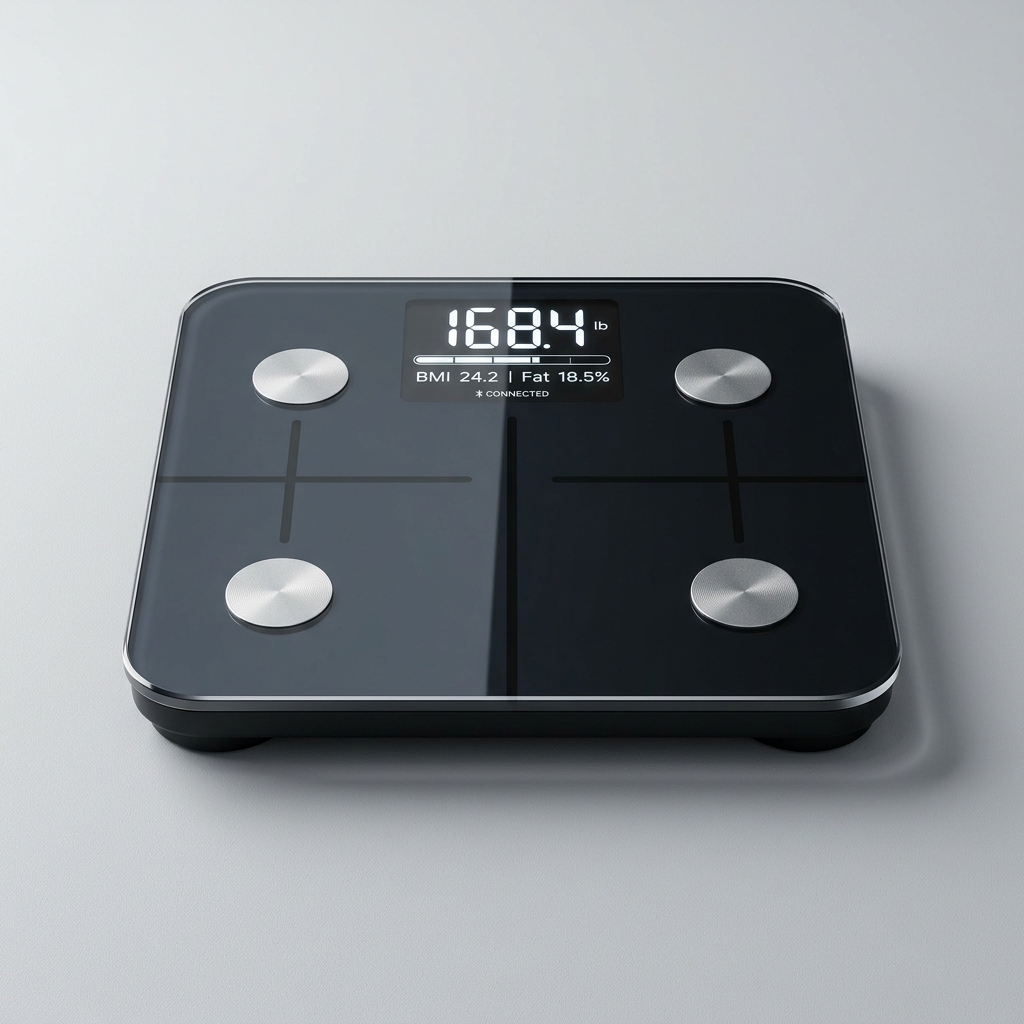
Accurately monitor weight, BMI, body fat %, and 13 essential body metrics with the best-selling HealthSense Fitdays Bluetooth Smart Scale.
As an Amazon Associate we earn from qualifying purchases.
Calculate your Body Mass Index (BMI) based on your height and weight to assess weight-related health categories.
Estimate your Total Daily Energy Expenditure (TDEE) and BMR. Find how many calories you need daily to maintain, lose, or gain weight.
Calculate your ideal body weight using four established medical formulas: Devine, Robinson, Miller, and Hamwi. Compare results for a comprehensive assessment.
Did you find these formulas useful? You can bookmark this page (press Ctrl+D) to access it instantly anytime, copy the live URL overrides, or even embed a fully interactive responsive widget on your own blog.
Free pregnancy due date calculator using Naegele's rule. Enter days since your last period and cycle length to estimate your due date, current week, and trimester.
Estimate your pregnancy due date using Naegele's rule. Calculate expected delivery date, current week of pregnancy, and trimester based on your last menstrual period.
Naegele's Rule is the standard clinical method used by obstetricians to calculate Estimated Date of Delivery (EDD). The standard formula assumes a 280-day (40-week) gestation period from the first day of the Last Menstrual Period (LMP).
The formula adds 1 year, subtracts 3 months, and adds 7 days to the LMP. For cycle lengths differing from 28 days, the due date is adjusted by adding (Cycle Length - 28) days. Gestational age is divided into three trimesters: First (Weeks 1–12), Second (Weeks 13–26), and Third (Weeks 27–40).
Naegele's Rule estimates the due date by adding 280 days (40 weeks) to the first day of the last menstrual period (LMP), adjusted for cycle length variations from the standard 28-day cycle.
Only about 5% of babies are born on their exact due date. Most births occur within two weeks before or after the estimated due date. The calculation provides a useful estimate for planning purposes.
First trimester: weeks 1-12. Second trimester: weeks 13-26. Third trimester: weeks 27-40. Each trimester involves different stages of fetal development and maternal changes.
Last updated: June 2026. All results are estimates for informational purposes only and do not constitute professional advice.
Calculates BMR, TDEE, calorie targets, and daily macronutrient splits (g) per meal.
Calculates optimal sleep and wake-up schedules aligned with 90-minute REM sleep cycles.
Evaluates body fat percentage, lean body mass, waist-to-height cardiovascular risk ratio, and multi-formula ideal weight targets.
Estimates VO2 Max using Cooper 12-min run test or resting heart rate method, displaying biological age and mortality risk tiers.
Calculate your Body Mass Index (BMI) based on your height and weight to assess weight-related health categories.
Disclaimer: Not medically reviewed. This Pregnancy Due Date Calculator tool is provided strictly for educational and general wellness screening purposes. Results are statistical estimations calculated using standardized body composition and metabolic formulas. These figures do not account for individual medical histories, metabolic properties, clinical conditions, genetics, or therapeutic factors. For medical advice or diagnosis, consult a licensed healthcare provider. All calculations are performed entirely in your browser — no data is sent to our servers.