




How to Play Against the Legends & Master Essential Tactics
Chess combinations and tactical motifs are the building blocks of decisive victories. As legendary champion Alexander Alekhine noted, “Combinations are the heart of chess.” To defeat the 10 Legends, master these key tactical weapons:
1. Forks & Double Attacks
Attacking two enemy pieces simultaneously. Knights and Queens are the most lethal forking pieces, frequently targeting king checks while simultaneously capturing loose rooks or undefended minors.
2. Pins & Skewers (X-Rays)
An absolute pin freezes a piece in front of its king. A skewer forces a high-value piece (like the King or Queen) to move, piercing through to capture the undefended piece behind it.
3. Discovered Attacks & Jumps
Moving one piece unmasks a devastating hidden attack from a rook, bishop, or queen behind it. Discovered checks and double checks force the enemy king to move, paralyzing their defenses.
4. Overloading & Undermining
Overworked pieces trying to defend two critical squares can be overloaded. Undermining (removing the guard) eliminates or decoys the sole defender of a key square or piece.
Meet the 10 Chess Legends
José Raúl Capablanca
The Chess MachineUltra-clear positional harmony, favorable piece exchanges, minimization of tactical chaos, and lethal endgame conversion.
Alexander Alekhine
The Tactical StormHigh tactical complexity, asymmetrical pawn play, deep psychological warfare, and fiery king assaults.
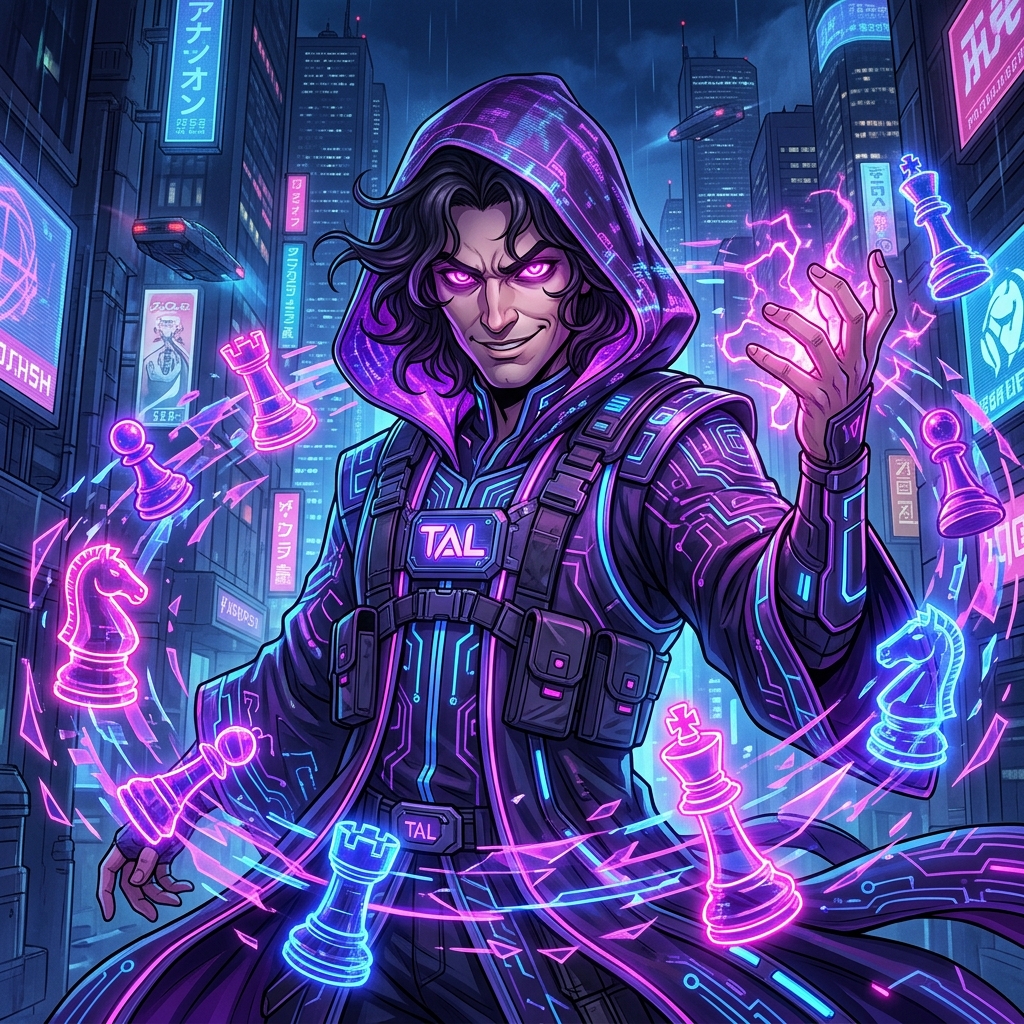
Mikhail Tal
The Magician from RigaRelentless piece sacrifices, intuition over raw material, wild king hunts, and maximizing dynamic chaos.
Mikhail Botvinnik
The Patriarch of Soviet ChessScientific opening preparation, structured pawn clamping, central domination, and relentless strategic execution.
Tigran Petrosian
Iron TigranDeep prophylaxis, positional exchange sacrifices, restrictive clamping, and creating impenetrable fortresses.
Bobby Fischer
The Precision MachineCrystal-clear forcing lines, direct active pieces, unforgiving tactical precision, and classical clarity.
Anatoly Karpov
The Boa ConstrictorPositional squeeze, tiny permanent advantages, target accumulation, and converting slight edges with icy calmness.
Garry Kasparov
The Beast from BakuMaximum dynamic energy, volcanic initiative, deep analytical preparation, and devastating attacking momentum.
Viswanathan Anand
The Lightning KidBlinding calculation cadence, universal opening flexibility, tactical sharpness, and rapid conversion.
Magnus Carlsen
The Mozart of ChessUniversal flexibility, squeezing blood from stones, relentless endgame stamina, and exploiting microscopic imbalances.
Adaptive Chess Difficulty Levels
Beginner & Casual
Shallow calculation depths with occasional tactical oversights and forgiving blunder margins, ideal for beginners and casual practice.
Intermediate & Advanced
Solid positional awareness, standard book openings, strict tactical punishment, and deep expression of the Legend’s signature tendencies.
Expert & Master
Grandmaster-level alpha-beta search with quiescence tactical stability, zero blunders, and relentless conversion technique.
Frequently Asked Questions
How does the Legend AI Personality layer work?
NexProTools Legends Chess does not simply change search depths under different names. Our unified chess calculation engine applies a multi-factor positional and tactical weight matrix reflecting each master’s historical playstyle: Tal prioritizes kingside piece sacrifices and tactical chaos; Petrosian exercises deep prophylaxis and restrictions; Capablanca seeks simplified, harmonious piece endgames; Kasparov unleashes dynamic initiative; and Carlsen maintains unrelenting positional pressure.
Are the AI personalities real chess engines or historical simulations?
The 10 Legend AI personalities are fictional gameplay simulations inspired by the historical playing styles, opening choices, and strategic philosophies of world champions. They are designed for educational enrichment and competitive chess practice.
Do I need to sign up or create an account to play?
No! NexProTools Legends Chess is 100% free, privacy-first, and zero-login. Your career statistics, difficulty unlocks, match histories, and local achievements are saved locally in your browser storage.
How does difficulty progression work?
Each Legend features 6 difficulty tiers: Beginner, Casual, Intermediate, Advanced, Expert, and Master. Defeating a Legend on your current highest unlocked tier unlocks the next difficulty tier. Defeating all 10 Legends on Master earns the prestigious Legend Grandmaster achievement.
How does post-game Legend Analysis evaluate my moves?
After completing any match, our post-game engine evaluates every ply in your game, identifying Brilliant moves, Great moves, Inaccuracies, Mistakes, and Blunders with plain-English beginner explanations and advanced centipawn delta metrics.